Policy Resolutions on the Illicit Papyrus Trade
Click here for ASP-AIP Papyrus Trade Resolution, which was approved by ASP Membership in January 2021, and by the AIP Membership at the 2022 Congress. That resolution stands in addition to the 2007 ASP resolution condemning illegal trade in papyrus.
Panels & Seminars
Meetings
Annual Panel at the Society for Classical Studies
Each year, the American Society of Papyrologists holds its Annual Meeting in early January in conjunction with the Joint Annual Meeting of the Society for Classical Studies (SCS) and the Archaeological Institute of America.
As part of the Annual Meeting, the ASP sponsors a panel of between three and five papers on a wide range of subjects within the field of papyrology. Submissions are welcome from all interested parties; membership in the ASP is not required, although it is strongly encouraged. However, since the ASP Annual Meeting is a part of the official SCS program, speakers must be members in good standing of the SCS. Also, speakers are held to the SCS’s single appearance policy, i.e. individuals can appear only once on the SCS program.
If you wish to submit a paper for the next Annual Meeting, a short abstract (500 words) should be sent to
Mike Sampson (Manitoba) at Mike.Sampson@umanitoba.ca
by February 15.
Abstracts are refereed anonymously, and decisions made by the end of March. Each paper may use audio-visual equipment if necessary (this should be indicated on the abstract). Reminders of the deadline for abstracts will be in the SCS Newsletter in October, will be posted on the PAPY list, and will appear on this page under News & Events.
Annual Panel at the Society for Biblical Literature
The Papyrology and Early Christian Backgrounds Group explores how the ancient papyri illumine the world of early Christianity and will appeal to scholars interested in palaeographic, linguistic, and textual questions, as well as those who specialize in the social and cultural history of early Christianity. Questions and abstract submissions for the next panel should be directed to AnneMarie Luijendijk (Princeton) or Brent Nongbri (Norwegian School of Theology).
Biennial Summer Institutes in Papyrology
Since 2003, the American Society of Papyrologists has helped organize routine intensive summer programs in papyrology, on what we hope will now be a regular biennial program. For more information on the summer institutes, visit our Summer Institute page.
Triennial International Congress of Papyrology
The 30th International Congress of Papyrology was held in July 2022 in Paris. The 31st Congress will take place from July 28 to August 2, 2025 at the University of Cologne.
Triennial North American Papyrology Seminar
North American Papyrology Seminars (NAPS) take place off-schedule from the triennial International Congress. The triennial seminars provide a less formal venue for ASP members to get together and share our work.
NAPS III was held at the University of Manitoba, Canada, in June 2024.
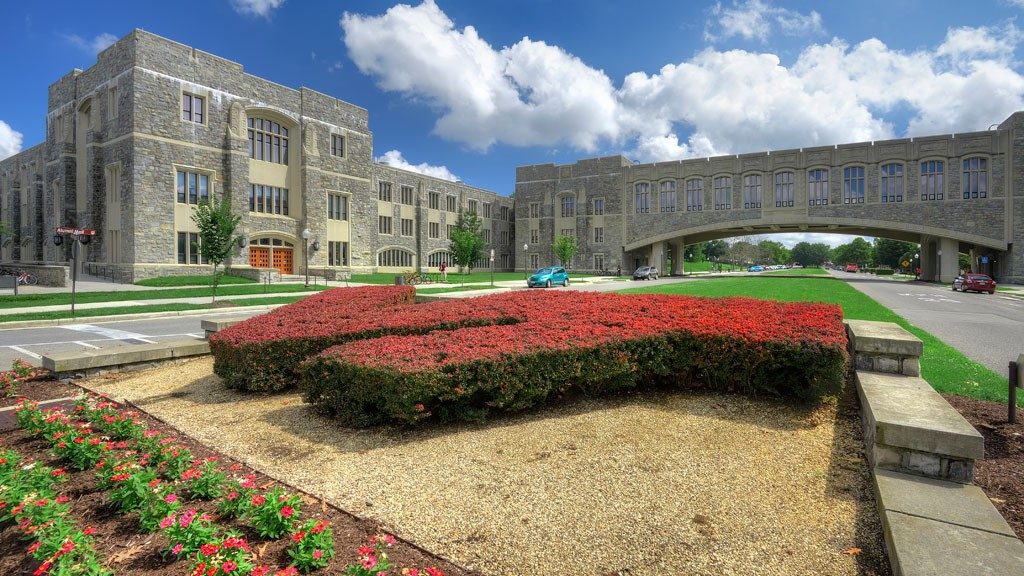
NAPS IV will be held at the Virginia Tech, Blacksburg VA, in June 2027.
News & Events
What’s New
SCS Panel 2027 – Jan. 8 – 2:00-5:00 – Fairfield meeting room
Culture and Society in Greek, Roman, and Byzantine Egypt
Date: Friday, January 8, 2027
Time (U.S. Eastern Time): 2:00pm – 5:00pm
Format: In-Person
Meeting Room at the Hotel: Fairfield
Organized by C. Michael Sampson (University of Manitoba)
NAPS IV – Call for Papers – June 2027 – deadline Mar. 1, 2027
North American Papyrological Seminar (IV)
The fourth meeting of the triennial North American Papyrological Seminar will be held at Virginia Tech in Blacksburg, Virginia, next summer on June 4-5 2027.
2026 ASP Book Prize – Nominations due August 15, 2026
The ASP Book Prize is an annual award that recognizes an outstanding papyrological monograph or edition published by one of our members. It carries an honorarium of $1,500. For the 2026 award, books published in 2024, 2025, and 2026—in print and/or in electronic format—are eligible for consideration. Candidates must have been ASP Members in good standing during the years under consideration.
For detailed information regarding process, eligibility, and timeline, click here.
Call for Papers – SCS Panel 2027 – due Feb. 15, 2026
Culture and Society in Greek, Roman, and Byzantine Egypt
Organized by C. Michael Sampson (University of Manitoba)
The American Society of Papyrologists invites proposals for papers for its panel “Culture and Society in Greek, Roman, and Byzantine Egypt” at the 2027 meeting of the Society for Classical Studies in Boston (7–10 January). Although the scope of papyrological studies is wide, submissions for this panel must meet at least one of the following criteria:
(a) they must deploy evidence for ancient literary cultures that is preserved on papyri, ostraka, or wooden tablets (in Greek, Latin, Coptic, demotic Egyptian, Arabic, or other pertinent languages);
(b) they must investigate aspects of the histories or cultures of Egypt from the Hellenistic to the early Islamic period.
Submissions from graduate students and faculty at all levels are welcome.
Please send abstracts that follow the guidelines for individual abstracts (see the SCS Guidelines for Authors of Abstracts) by email, as a Word or PDF email attachment, to C. Michael Sampson (University of Manitoba) at mike.sampson@umanitoba.ca by February 15, 2026.
Abstracts should be a maximum of 500 words (excluding bibliography) and suitable for a 20-minute presentation. Please ensure that the abstracts are anonymized, to permit a process of double-blind review.
Decisions will be communicated to the authors of abstracts by mid-April. Please note that authors submitting abstracts must be SCS members in good standing at the time of registration for the 2027 meeting.
Brendan Haug. Garden of Egypt: awarded 2025 ASP Book Prize (announced Feb. 6, 2026)
2025 American Society of Papyrologists Book Prize
The ASP Book Prize is an annual award that recognizes an outstanding papyrological monograph or edition published by one of our members. It carries an honorarium of $1,500.
Brendan Haug
Garden of Egypt: Irrigation, Society, and the State in the Premodern Fayyūm.
(Ann Arbor: University of Michigan Press, 2024)
Available in open access: https://doi.org/10.3998/mpub.11736090
Garden of Egypt is an innovative work of environmental history, startlingly original in conception and execution, and, in a time of acute climate crisis, of more than academic relevance. Like the unique landscape of the Fayyūm depression on which it focuses, the breadth of Haug’s examination in chronological, linguistic, evidentiary, and socio-political terms is without parallel. Ranging from its pharaonic reclamation from the Birkat Qārūn, the lengthy era of Graeco-Roman occupation enabled by further Ptolemaic intervention, its early Islamic period, whose ongoing vitality is recorded in al-Nābulusī’s thirteenth-century Villages of the Fayyūm, and even extending into the nineteenth century, the approach to the Fayyūm is a holistic and synthesizing one, treating human interactions with the landscape on the basis of all the available evidence.
Throughout Garden of Egypt, a complicated nexus of relationships is traced and analyzed. The perennial water of the Baḥr Yūsuf is the story’s protagonist, but the ways in which it is (re)shaped and (re)conceived over the centuries – by the irrigation machinery that supplied and distributed it, the countless communities and villagers who both depended upon it and who competed for access to it, and the governments whose policies and judiciary regulated it – make this a study that is as interesting for the sociology of the premodern Fayyūm it brings to life as for the insights it sheds on the region’s administrative history.
Although the sources which inform the study are diverse, evidence drawn from antiquity’s papyrological legacy is at the heart of the book. Far from limiting its scope to general trends or evolving phenomena, the longue durée under examination is repeatedly animated by the vivid testimony of the Fayyūm’s premodern inhabitants, and the sociological phenomena pertaining to individuals’ relationships to water are grounded firmly in the documentary record. Disputes over water rights between particular villages, penthēmeros receipts documenting the ‘coordinated localism’ that distributed the responsibility for canal maintenance in a collective way, an order to dam a canal briefly (in the hope that the water’s subsequent release would irrigate properties further downstream), the collapse of Theadelphia’s population in the early fourth century – papyrological testimony for the manifold issues surrounding access to water in the Fayyūm peppers the book. Garden of Egypt is the history of a unique environment, yes, but especially of its inhabitation and its inhabitants across the centuries.
For the originality of its analyses of the relationships between individuals, communities, institutions, water, and the broader environment across more than a millennium of Egyptian history, we are delighted to honor Garden of Egyptwith the inaugural 2025 American Society of Papyrologists Book Prize.
Jury: C. Michael Sampson (Chair), Brian McGing, Francisca A. J.Hoogendijk
Papyri.info Endowment – Important Update Sept. 2025
The fund to provide a permanent endowment supporting digital resources in papyrology, particularly the Papyrological Navigator and the resources brought together there, has now been moved from the Society for Classical Studies to the American Philosophical Society (APS). This fund, sponsored by the Association Internationale de Papyrologues and the American Society of Papyrologists, had reached about $560,000 as of the end of July, as a result of the contributions of many supporters, whom we thank warmly. At present it is still in the stage of building the principal, so all income and capital gains are reinvested. The APS, the oldest learned society in the U.S., has professional management for its endowment as well as a development office that will provide receipts for all contributions. We look forward to further support from all. The address for contributions by credit or debit card is https://www.amphilsoc.org/endowment-and-restricted-gifts#paragraph-3385, where information can also be found on making gifts by check or by transfer of securities.
Bylaws & Policies
Organization
Bylaws of the Society
In January 2022, the Membership voted to incorporate the Society, and therewith to adopt new Bylaws.
Click here for the full text of the Bylaws.
The original ASP “Constitution” and its revisions can be found at the History tab.
Articles of Incorporation
The ASP was founded in 1961, and approved as a 501(c)(3) non-profit in 1964. In 2022, the ASP was incorporated.
Professional Ethics Statement
In January 2022, the Membership adopted a new Professional Ethics Statement.
Click here for full text of the Ethics Statement.
The Ethics Committee, which advises and assists the Board on questions regarding professional ethics, is one of the standing committees for the Society. Consult the governance tab for current appointments.
Prizes & Subventions
Awards
ASP Travel Subventions
In 2024 the American Society of Papyrologists established a new program to make available a limited budget to support, on a competitive basis, travel for papyrological training (such as the Summer Institutes in Papyrology) or research in papyrology (such as travel to collections). The competition is open to graduate students, postdoctoral fellows, and untenured faculty, including contingent faculty. Applicants must be members in good standing of the ASP. Preference is given to students and faculty in North American institutions. The maximum amount of each award is $2,000.
The application should consist of:
- One-page single-spaced typed narrative description of the training or research to be undertaken and the funding amount requested.
- Current curriculum vitae.
- One letter of recommendation from someone who can address the importance of the training in / research in papyrology for furthering your current research questions and projects.
- A budget that includes a list of any other sources of funding applied for with amounts requested.
The application should be sent to asp@papyrology.org, with the subject heading “Application for ASP Travel Award”. Applications are reviewed on a rolling basis.
A brief report about the project and its impact will be due within three months of receiving the award.
Vetted on a rolling basis by the three ASP Executive officers.
ASP Book Prize
The ASP Book Prize
About the Award and Eligibility
The ASP Book Prize is an annual award that recognizes an outstanding papyrological monograph or edition published by one of our members. It carries an honorarium of $1,500.
The award is selected by a committee of three members and is presented at the Society’s annual meeting. Books published in the year of the award or one of the two years preceding – in print and/or in electronic format – are eligible for consideration, including books previously nominated for the prize. To be considered eligible, candidates must have been ASP members in good standing during the years under consideration. The work chosen to receive the award will not have appeared in substantially the same form in an earlier publication, and it will either make substantive use of evidence preserved on papyri, ostraca, or tablets, or will comprise an edition or editions of texts preserved on such media.
View detailed information regarding process, eligibility, and timeline.
View current & past winners of the ASP Book Prize